The records to bring home from treatment abroad
The treatment usually goes fine. What causes trouble later is arriving at your own dentist with nothing they can act on.
Axolotlane2 min read
Most problems with dental treatment abroad do not happen in the chair. They happen six months later, at home, when something needs checking and the dentist in front of you has no idea what was done.
That is a paperwork problem, and it is entirely preventable. Ask before you fly home, while the clinic still has you in front of them and every file is still open.
What to ask for, specifically
Not "my records" — that gets you a discharge letter. Ask for these by name:
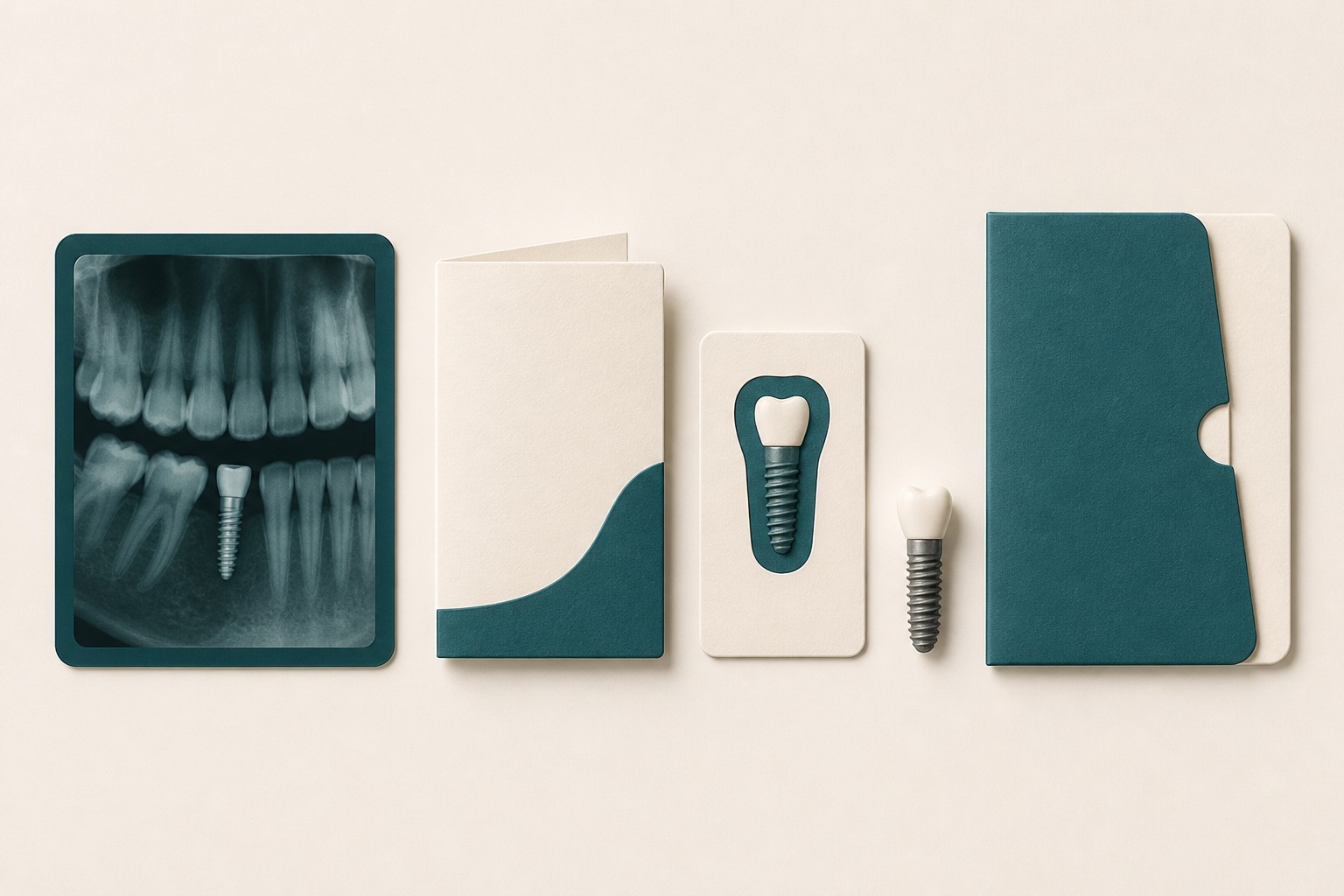
- The imaging, as files rather than printouts. X-rays and any CBCT scan, in DICOM format where the clinic can export it.
- The treatment notes, listing what was done at each appointment and on which teeth, using tooth numbers.
- The materials, by manufacturer and product name. For an implant this means the system, the diameter and the length. "A titanium implant" is not an answer anyone can work with later.
- The laboratory work — what was made, from what, and by which lab.
- Any guarantee, in writing, saying what is covered and for how long.
- Photographs before and after, if they took them.
Why the implant detail matters more than it sounds
If an implant needs any work years later — a new crown, a replacement component — the dentist doing it needs to know the exact system. Components are not interchangeable between manufacturers, and an implant that cannot be identified sometimes has to be treated as if it were unrestorable.
This is the single most common gap, and it takes one sentence to close: which implant system, which size, which batch.
Get it in a language your dentist reads
Notes in a language your dentist does not read are not records, they are an obstacle. Many clinics will provide an English summary if you ask while you are there. Almost none will chase it down for you a year later.
Check the files before you leave
Open them. A disc you cannot read, an export that turns out to be a single flattened image, a PDF of a photograph of a screen — all of these are discovered too late and only by looking.
If the imaging is on a disc, ask for a copy by email or on a USB stick too. Laptops stopped having disc drives some time ago.
Tell your own dentist before, not after
A short note to your dentist at home saying what is planned and roughly when, so the treatment is in your record either way. It costs nothing and it means that if something does need attention, you are a patient with a history rather than a surprise.
The short version
Ask for imaging as files, notes with tooth numbers, materials by name, the lab, the guarantee, and an English summary. Check you can open all of it before you fly. Those fifteen minutes at the clinic are the difference between a treatment your dentist can look after and one they can only guess at.
Axolotlane coordinates international dental care and the travel around it. More at axolotlane.com.